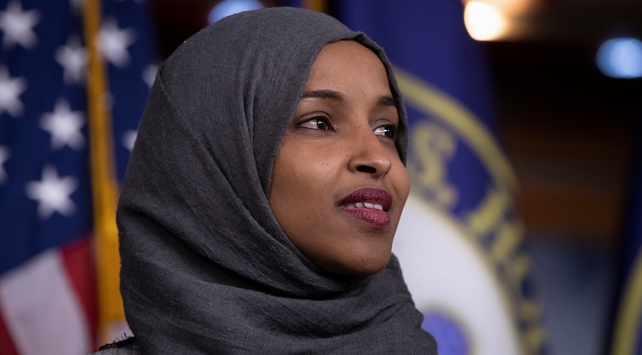
Ever since the midterm election, conservative media in the United States have targeted with special zeal Ilhan Omar, an incoming Somali-American Democratic congresswoman and a devout Muslim who wears hijab. In response to Democrats’ push to remove a headwear ban on the House floor to accommodate Omar, conservative commentator and pastor E.W. Jackson complained on a radio show that Muslims were transforming Congress into an “Islamic republic.”
The Democratic Party has several rising political stars with Arab or Muslim backgrounds, all of whom have become objects of such conspiracy theories. But it’s not only American conservatives who have been indulging in this culture war. The organized attacks have also been coming from abroad—specifically, from Saudi Arabia and the United Arab Emirates.
The midterm elections have amplified an existing suspicion in Middle Eastern media of Muslim political activism in the United States. Academics, media outlets, and commentators close to Persian Gulf governments have repeatedly accused Omar, Rashida Tlaib (another newly elected Muslim congresswoman), and Abdul El-Sayed (who made a failed bid to become governor of Michigan) of being secret members of the Muslim Brotherhood who are hostile to the governments of Saudi Arabia and the UAE.
Saudi-owned Al Arabiya published a feature insinuating that Omar and Tlaib were part of an alliance between the Democratic Party and Islamist groups to control Congress. The article accused the two of being “anti-Trump and his political team and options, especially his foreign policy starting from the sanctions on Iran to the isolation of the Muslim Brotherhood and all movements of political Islam.”
Occasionally these attacks have been made by officials of those governments, in apparent anxiety that their countries’ expensive public relations and lobbying efforts might be undermined. Just hours after Omar won her election, for example, a staffer at the Saudi Embassy in the United States accused her of following the ideology of the Muslim Brotherhood, which he said has permeated the Democratic Party. “She will be hostile to the Gulf and a supporter of the political Islam represented in the Brotherhood in the Middle East,” tweeted Faisal al-Shammeri, a cultural advisor at the Saudi Arabian Cultural Mission to the United States, which is part of the embassy, and a writer for Al Arabiya.
Source: FP