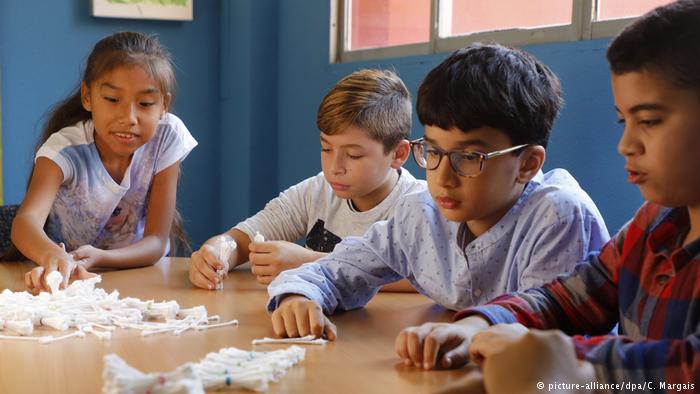
The children of migrants in Germany have significantly worse employment opportunities than peers without foreign roots. According to a study by the Institute of German economy (IW) the proportion of the working population in the 25 – to 44-Year-olds with a migration background in the year 2017, at 72.3 per cent.
Around 15 points less than their peers without a migration background (87.2 percent), as the “Rheinische Post” reported. A disproportionately high number of 18 – to 20-Year-old immigrant pursued, therefore, neither an academic nor a vocational education path.
“This can be explained mainly with the relatively low level of education andgaps in the knowledge of German “, write the researchers in their report. Because even young people who are born in Germany or in the age of the child migrant, not reaching the end of their Educational career “is often not the same level of education as people without a migration background.”
The findings surprised the researchers, because the families with a migrant background often have particularly high educational goals and ambitions for their children. “However, these are in the German education system is less successful than other children,” the report says. There are mainly structural causes.
In addition, people with a migrant background are more susceptible to poverty: in 2017, 14 percent of them had an income below the poverty risk threshold. This is more than twice as high as among people without a migration background (6.1 percent).
DGB-training report trainees are so unhappy as never to recommend much more social and political efforts, children from migrant families involve earlier in early childhood education. So a lack of could language skills be better combated.
Source: News Article Insider